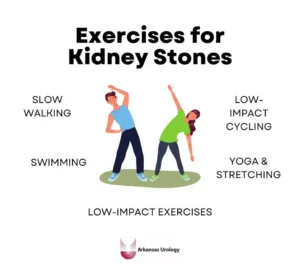
If you have ever experienced a kidney stone, you know it is not something you forget quickly. The pain can be sharp and sudden, and it is completely understandable to have questions about what you should and should not be doing while your body works through it. One of the questions we hear often is whether exercises for kidney stones are safe or even helpful. We want to help you understand what the research says, what we typically recommend to our patients, and how staying active fits into both recovery and long-term kidney health.
Can You Exercise With Kidney Stones?
For most people with a small to moderate kidney stone, light to moderate activity is not only safe but can actually be helpful. Movement supports urine flow, which plays a role in helping a stone move through the urinary tract naturally. When you stay hydrated and keep your body gently active, you are giving the stone the best chance to pass on its own timeline.
That said, every patient is different. Stone size, location, pain levels, and overall health all factor into what kind of activity is appropriate. We always encourage patients to tune in to how they are feeling and to reach out to our office if something does not feel right.
When to Hold Off on Exercise
There are situations where rest is the more appropriate choice. If you are experiencing severe pain, fever, chills, nausea, or blood in your urine, your body is signaling that it needs support, not activity. Stones that are causing a blockage or that are too large to pass on their own may also require a period of reduced movement while your provider determines the best course of action.
Signs You Should Stop and Call Our Office
If you are exercising and notice a sudden increase in pain, vomiting, difficulty urinating, or signs of infection such as fever, please stop and contact us right away. These symptoms can indicate a complication that needs prompt attention.
Best Types of Exercise for Kidney Stones
When you are managing a kidney stone and feel well enough to move, low-impact activity is the way to go. The goal is to keep your body gently active without adding unnecessary physical stress. High-intensity workouts or heavy lifting can sometimes intensify discomfort and are generally better saved for after the stone has passed.
Activities that tend to work well include:
- Walking at a relaxed, comfortable pace
- Swimming or gentle water-based movement
- Low-impact cycling on a stationary or flat-surface bike
- Yoga or gentle stretching routines
- Light strength training with minimal strain
- Everyday household activities like light cleaning or gardening
These options keep you moving in ways that are manageable and supportive without putting excessive strain on your body.
Walking & Kidney Stones
Walking is one of the most commonly recommended forms of activity for patients working through a kidney stone, and for good reason. The gentle, consistent movement can help encourage a stone to travel through the urinary tract, and staying upright and active tends to be more beneficial than prolonged bed rest. When you combine daily walking with consistent hydration, you are doing two of the most effective things available to support natural passage.
We often remind patients that staying hydrated is just as important as the movement itself. Aim to drink enough water throughout the day to keep your urine light in color, which is a good general indicator that your kidneys are getting what they need.
How Exercise Supports Kidney Stone Prevention
Exercise is not just helpful during an active stone. Regular physical activity plays a meaningful role in reducing the likelihood of future stones forming. Here is how movement supports your kidney health over time:
Weight management: Obesity is a known risk factor for kidney stones. Carrying excess weight affects the way your body processes calcium and oxalate, which can increase stone-forming activity in the kidneys. Maintaining a healthy weight through regular exercise helps reduce that risk meaningfully over time.
Blood pressure regulation: High blood pressure is associated with increased kidney stone risk, and the connection goes both ways. Exercise supports healthy blood pressure levels, which in turn benefits kidney function and reduces the strain placed on your urinary system.
Blood sugar and diabetes: Diabetes is another condition linked to a higher likelihood of developing stones, particularly uric acid stones. Staying active helps regulate blood sugar and supports the metabolic conditions that influence stone formation.
Kidney perfusion: Physical activity promotes healthy blood flow throughout the body, including to the kidneys. Good kidney perfusion supports the organ’s ability to filter efficiently and may reduce the buildup of stone-forming minerals in urine.
Mental stress relief: While stress does not directly cause kidney stones, it can contribute to habits that raise risk, such as poor hydration or dietary changes. Regular movement is one of the most reliable ways to manage everyday stress.
Urine flow: Staying active generally supports more consistent and adequate urine output, which helps flush out minerals before they have a chance to crystallize and form stones.
Understanding Kidney Stones and What Causes Them
Kidney stones form when certain substances in the urine, such as calcium, oxalate, or uric acid, become concentrated enough to crystallize and stick together. Not all kidney stones are alike, and understanding the type of stone you have helps us guide your treatment and prevention plan.
Common stone types include:
- Calcium oxalate stones: The most common type, often linked to high oxalate intake or low fluid consumption
- Uric acid stones: Associated with diets high in animal protein or conditions that affect uric acid metabolism
- Struvite stones: Frequently connected to urinary tract infections
- Cystine stones: A rarer type caused by cystinuria, a genetic condition that causes the kidneys to excrete too much cystine
- Stones related to hyperoxaluria or hypercalciuria: Conditions involving excess oxalate or calcium in the urine that require targeted dietary and medical management
Underlying metabolic conditions such as hypocitraturia, which means low citric acid in the urine, can also increase stone risk. Citric acid from natural sources like lemon juice helps prevent stone formation by binding with calcium in the urine and reducing crystallization. These factors are part of why a thorough evaluation matters when you come in to see us.
Diagnosis & When to Seek Care
If you are experiencing recurring kidney stones or significant pain, we will typically begin with a thorough evaluation that includes imaging such as a CT scan, along with blood tests and urine testing to understand what is happening and why. In some cases, genetic testing may be appropriate to identify an inherited tendency toward certain stone types.
You do not need to wait until the pain is unbearable to reach out. Early evaluation helps us catch issues sooner and build a prevention plan that works for your life.
Kidney Stone Medications and Treatment Options
Many stones pass on their own with hydration, movement, and appropriate pain management. Kidney stone medications range from over-the-counter options for mild discomfort to prescription medications such as alpha blockers, which help relax the ureter and support natural passage. Potassium citrate is another commonly used prescription medication that helps prevent certain stone types from forming by raising citrate levels in the urine.
When a stone requires intervention, our providers have experience with a range of approaches:
- Lithotripsy: Uses sound waves to break the stone into smaller pieces that can pass more easily
- Ureteroscopy: A minimally invasive procedure that allows us to locate and remove the stone directly
- Percutaneous nephrolithotomy: Used for larger stones that cannot be addressed with less invasive methods
Our team will take the time to explain your options clearly and make sure you feel confident in whatever path forward makes sense for you.
Talk to Our Team at Arkansas Urology
Kidney stones can be a frustrating and painful experience, and we understand that navigating recovery raises a lot of questions. Our providers are here to help you work through an active stone, understand what caused it, and put a plan in place to help lower your chances of going through it again. If you have concerns about your symptoms or want to talk through your kidney health, we would love to hear from you.
Frequently Asked Questions
Can you exercise with kidney stones? In most cases, yes. Light to moderate activity is generally safe and can help support natural stone passage. If your pain is severe or you have a fever, rest and contact our office first.
Is exercise good for kidney stones? Exercise supports urine flow, healthy weight, blood pressure regulation, and kidney function, all of which contribute to both recovery and prevention of future stones.
Does walking help with kidney stones? Yes. Walking is one of the most commonly recommended activities because it encourages gentle movement through the urinary tract without putting excess strain on the body.
What helps with kidney stone pain relief during exercise? Staying well hydrated, choosing low-impact activities, and using over-the-counter or prescription pain relievers as directed by your provider can help keep discomfort manageable while you stay active.