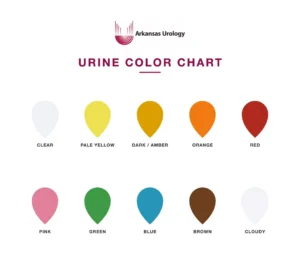
Urine color is something most people don’t think about until something looks different, and when it does, it’s natural to wonder what’s going on. The good news is that most urine color changes are completely harmless and linked to something simple like hydration, what you ate, or a vitamin you’re taking. That said, your urine can also be one of the first signals your body sends when something needs attention.
This guide walks you through what different urine colors may mean and when it’s worth reaching out to a urologist.
What Determines Urine Color
Your kidneys work constantly to filter waste and excess fluid from your blood. From there, urine travels through your ureters to your bladder, then exits through your urethra. A natural pigment called urochrome, produced as your body breaks down old red blood cells, gives urine its yellow color. How concentrated that pigment becomes depends largely on how much water is in your system. When you’re well hydrated, urine is pale and diluted. When you’re dehydrated, it becomes darker.
A few other factors can also influence urine color, including:
- Diet: Certain foods contain natural pigments that pass through your body and into your urine.
- Vitamins and supplements: B vitamins and others can brighten urine to an almost neon shade.
- Medicines: Some prescriptions are known to temporarily change urine color.
- Underlying health conditions: Issues with your kidneys, bladder, liver, or bile duct can all affect what you see.
Urine Color Chart: What Each Shade May Mean
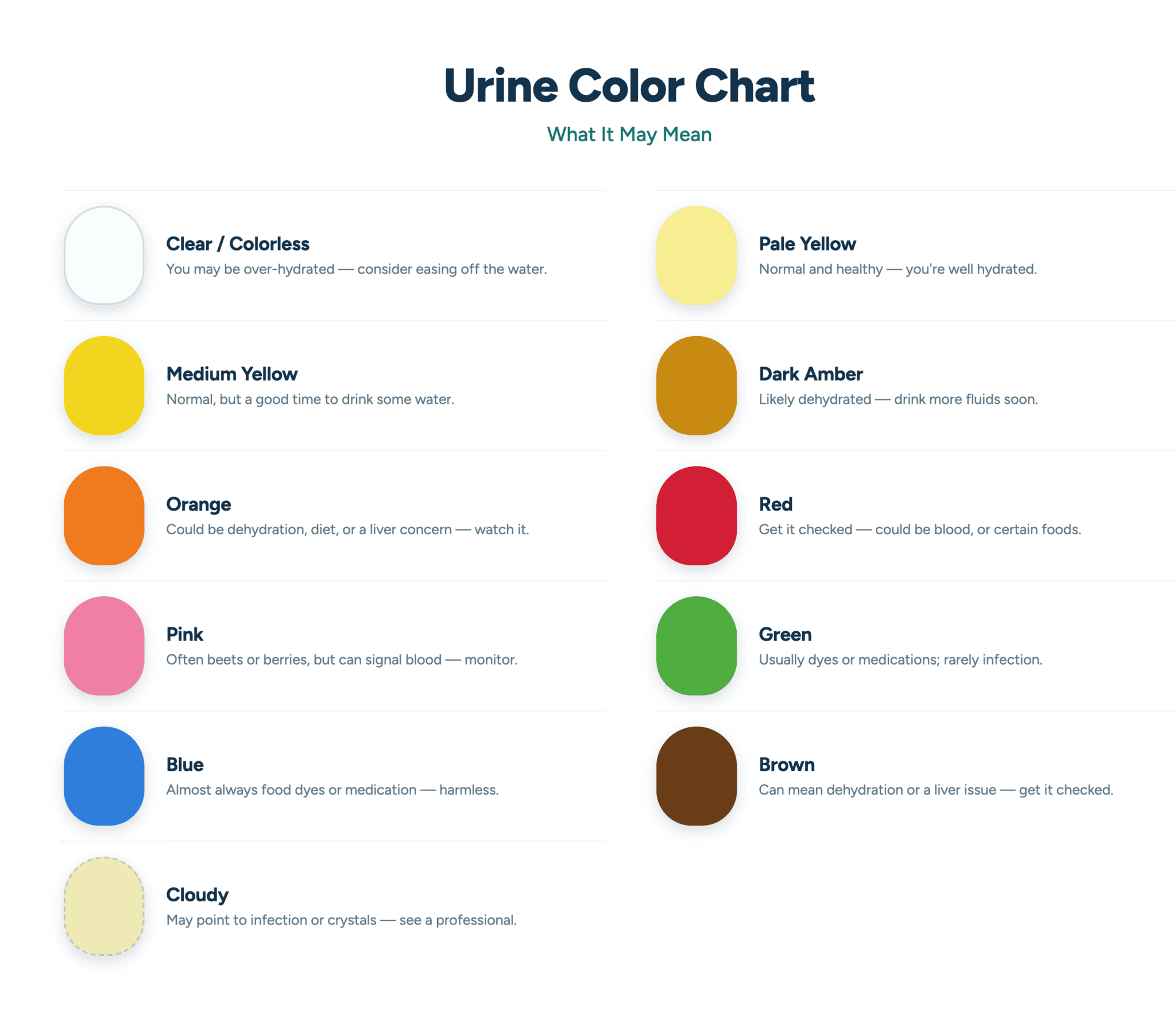
Below, we break down common urine colors and what might be behind them. Keep in mind that this chart is meant to inform, not replace a medical evaluation. If you notice a change that’s sudden, persistent, or comes with other symptoms, we encourage you to reach out so one of our providers can take a closer look.
Clear Urine
Clear or nearly colorless urine usually means you’re very well hydrated, sometimes even overhydrated. This can happen after drinking a large amount of water in a short period. On its own, clear urine isn’t typically a concern, but if it’s a consistent pattern alongside excessive thirst or frequent urination, it’s worth mentioning at your next visit.
Yellow Urine
Pale to medium yellow is the normal, healthy range and a good sign that your hydration is on track. Darker, amber-colored urine often signals mild dehydration and a simple need to drink more fluids throughout the day.
Orange Urine
Orange urine can show up with dehydration, certain foods, or medicines such as rifampin or phenazopyridine, which are sometimes prescribed for urinary tract infections. In some cases, it can also point to a bile duct issue or liver problem, especially if you notice pale stools or yellowing of the skin alongside it.
Red Urine
Red urine tends to be the most alarming because it can look like blood. Foods like beets and blackberries are common, harmless culprits. That said, red urine can also be a sign of:
- A urinary tract infection
- Kidney stones
- Bladder or kidney cancer
- Recent strenuous exercise
Because blood in urine can point to something more serious, we always recommend having it evaluated rather than assuming it’s diet-related.
Pink Urine
Pink urine shares many of the same causes as red urine, just in a lighter shade. Beets and blackberries are frequent culprits here too, but pink urine can also result from a urinary tract infection or kidney stones. If it shows up without an obvious dietary explanation, it’s a good idea to have it checked.
Green Urine
Green urine is rare and usually tied to certain medicines, food dyes, or uncommon medical conditions. While it’s unusual to see, it’s typically not dangerous on its own and often clears up once the cause works its way out of your system.
Blue Urine
Blue urine is even less common than green and is generally linked to specific medicines or rare hereditary conditions. Amitriptyline is a medication associated with this change. As with green urine, it’s usually harmless, but worth mentioning to your provider if it persists or if you’re unsure of the cause.
Brown Urine
Brown urine can be a sign of significant dehydration, but it may also follow eating fava beans or rhubarb, or taking medicines like sulfasalazine. In some cases, it can point to a liver or bile duct problem, since it may indicate bile pigments your body isn’t processing the way it should.
Cloudy Urine
Cloudy urine is often linked to urinary tract infections, though it can also stem from kidney stones, dehydration, or a high concentration of certain minerals. When cloudy urine comes with a strong urine smell or discomfort, it’s more likely pointing to an infection that needs treatment.
When Urine Color Changes Are a Concern
Occasional changes in urine color are usually nothing to worry about, especially when there’s a clear cause like a food, vitamin, or medicine. But certain symptoms alongside a color change are worth taking seriously. We encourage patients to reach out if they notice:
- Painful urination
- Fever
- Abdominal pain or lower back pain
- Increased urinary frequency or urgency
- Visible blood in urine
- Color changes that last more than a day or two without an obvious cause
These symptoms together can point to a urinary tract infection, kidney infection, or, in more serious cases, sepsis. If you’re experiencing a sudden, unexplained color change along with fever or pain, please don’t wait to get it evaluated.
Tips for Maintaining Healthy Urine Color
Supporting normal urine color often comes down to a few consistent habits. Small changes can make a meaningful difference in how your urinary system feels day to day:
- Stay hydrated: Steady water intake throughout the day is more effective than drinking large amounts all at once.
- Pay attention to changes: Shifts in urine volume, color, or frequency can be early signals worth noting.
- Be mindful of diet: Beets, fava beans, blackberries, and rhubarb are all known to temporarily change urine color.
- Talk to us about your medicines: If a new prescription changes your urine color, we’re happy to help you understand whether that’s expected.
- Keep up with kidney and bladder health: Routine care can help catch issues like kidney stones early, before they become bigger problems.
Questions About Your Urine Color? We’re Here to Help.
Most urine color changes resolve on their own, and we hope this guide gives you a helpful starting point for understanding what your body might be telling you. If something doesn’t feel right or you’re seeing changes that concern you, blood in urine, persistent cloudiness, or color shifts alongside pain or fever, we’re here.
At Arkansas Urology, our providers are committed to helping patients feel informed, comfortable, and cared for every step of the way. Don’t hesitate to schedule an appointment if you have questions.